$89 New patient Exams & X-rays / $35 Emergency Visits
Oral Cancer Self-Check at Home: Dr. Patel’s 60-Second Screening Tips for Conroe Residents
Early detection saves lives, and no equipment is necessary for this. Mouth and throat cancers will hit tens of thousands of Americans this year, and many begin as small changes that you can feel or see. The American Cancer Society predicts that 59,660 people in the U.S. will be diagnosed with oral cavity or oropharyngeal cancer in 2025, and that approximately 12,770 will die—numbers that underscore why a quick checkup makes a difference.
Why an early check is useful
It can result in better outcomes (early detection of oral cancer leads to early treatment). The chance of surviving oral cancer drops up to 5 years once the disease has metastasized; for cancers of the oropharynx, the chance of survival drastically drops at the late stage compared to the earlier stages. That’s a strong reason to include a simple oral cancer self-check into your monthly oral care routine.
Dr. Patel’s 60-second self-test (perform this each month)
Position yourself under a strong light and in front of a clear mirror. Wash your hands. Complete these quick steps – slow, steady, and gentle.
1) Face & neck
Look forward. Tilt your chin up and down. Feel with your fingers along your jawline and down both sides of your neck, including under the jaw, for any new lumps, swelling, or tenderness (lymph nodes). If you wear a removable denture or aligner, take it out first.
2) Lips & cheeks
Pull back your lips. Check the inner lining (buccal mucosa) of each cheek. You’re looking for red or white patches, ulcers that don’t heal, or rough areas that feel different against your tongue.
3) Tongue (top, sides, underside)
Stick out your tongue and move it from side to side. Then lift the tip to the roof of your mouth to examine underneath. The sides and bottom are also common sites for cancer cell growth. Check for sores, color changes, or an area that feels hard or newly developed.
4) Floor of mouth & gums
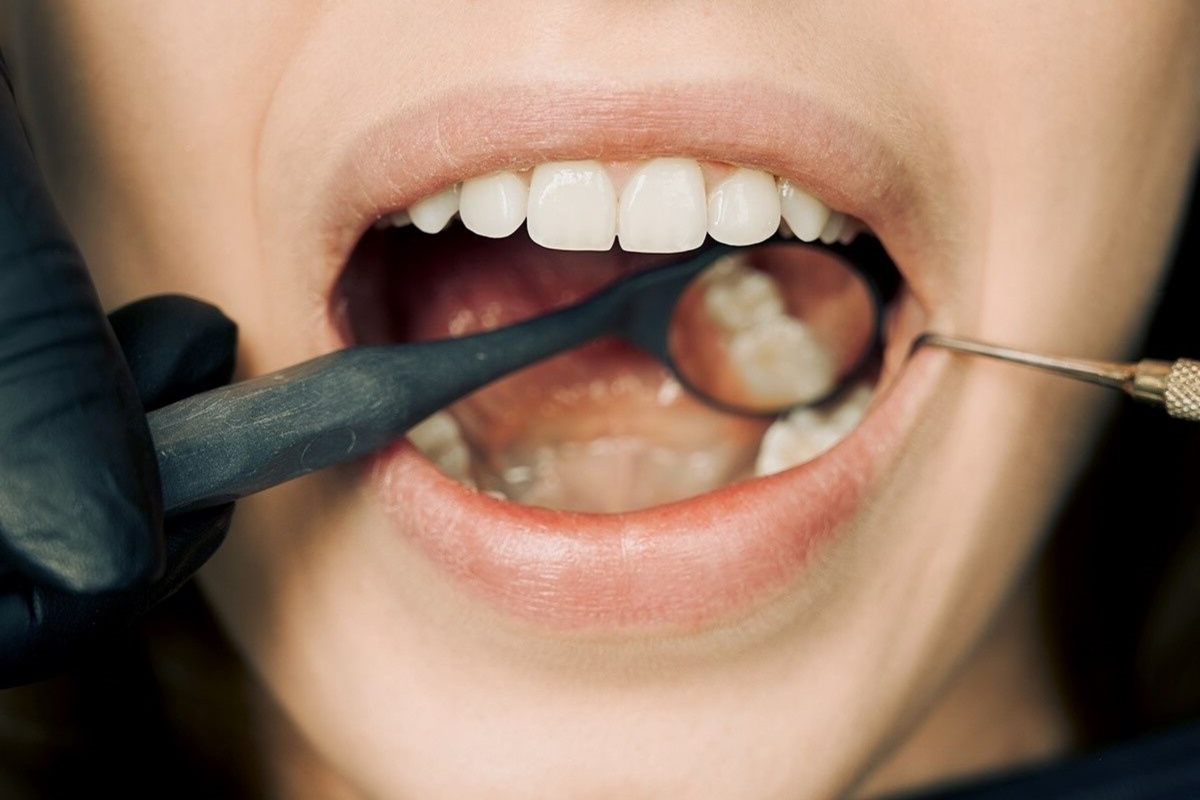
With tongue up, check the floor of your mouth and gumline. Press gently with a clean finger for tenderness or thickening. Pain that does not go away or a new lump requires a thorough check by a dentist in Conroe.
5) Roof of mouth & throat
Open your mouth wide and say “ahh.” Shine a light to view your palate and the back of your throat. Check for swelling, ulcers, or patches that do not go away.
6) What to watch for and when to call
- A sore, ulcer, or patch (red/white) that stays for more than two weeks
- A lump in the mouth, neck, or jaw that won’t go away
- Trouble swallowing, numbness of the tongue, hoarseness, or a feeling of something “stuck”
Any of the above entitles you to schedule an immediate assessment. A Conroe dentist can perform a thorough visual and manual inspection; many residents look for the top Conroe dentist to check anything suspicious right away.
Risk factors you can reduce
Tobacco in any form and alcohol are major risk factors for oral and pharyngeal cancers, and using them together increases risk. HPV also poses a threat of throat cancers. Reducing consumption of tobacco, alcohol, and being updated with HPV vaccination decreases risk over time.
Self-check is not a diagnosis
A home oral cancer self-examination is a speedy screening, not a medical diagnosis. Dentists and hygienists always include head-and-neck and intraoral exams during check-ups, and if they suspect anything, they evaluate it professionally through a biopsy to identify what it is. That’s the safest way to go.
Do a one-minute-a-month oral cancer self-exam. If you find something new and it doesn’t go away, don’t delay. Contact Grand Central Dentistry to book an oral cancer screening with Dr. Patel today.